Engagement Ring Education

When it comes to purchasing engagement rings, we want to help you make the most informed decision possible. We think you should always be educated about what you’re buying!

Ring Setting Styles:

  • Bezel
    A bezel-set diamond is surrounded by metal. This emphasizes the diamond’s shape, while protecting it from scratches.
  • Crisscross
  • Distinctive
  • Halo
    A halo ring features a center diamond surrounded by a circle of smaller diamonds. A bold style that stands out in a stack.
  • Pave
    Pave (pronounced pah-vay) is a French word that means “paved.” Rings with pave bands look like they’ve been paved with diamonds—there is little visible metal, meaning maximum visible sparkle
  • Sidestone
    Like a three stone, but with smaller accent diamonds. Think of it as a step between a solitaire and a three stone.
  • Solitaire
    A solitaire ring is an engagement ring with a single, solitaire diamond. A classic style that emphasizes the center stone.
  • Splitshank
  • Straight
  • Threestone
    Just what it sounds like—three diamonds side by side. Traditionally thought to represent the past, present, and future of a relationship.
  • All Metal Band
    A band that has no diamonds on it.
  • Diamond Band
    A band with diamonds on it.

Ring Metal Types:

  • Gold
    Our gold engagement rings are a traditional and beautiful choice. We offer rings in the finest 18K yellow, white, and rose gold.
  • Platinum
    Our platinum engagement rings are gorgeous and incredibly durable. Platinum is a denser metal than gold and will never tarnish or need rhodium plating.

Sizing Your Rings:

A few suggestions for how to quickly and accurately determine ring size:
  • Put one of your fiancé-to-be’s rings on your finger and mark with a pen how far down it goes. Then, head to the Diamond Center jewelry store in Madison or Janesville and use our ring sizer to determine which ring size hits the same spot.
  • Request a ring size from us, then match it up to one of your fiancé-to-be’s rings.
  • If you and your fiancé have discussed your future marriage plans, you could simply ask what his or her ring size is.
  • Keep in mind: Rings worn on the ring finger of the non-dominant hand should be about ¼ size smaller than rings worn on the ring finger of the dominant hand.

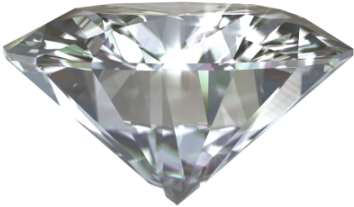
Anatomy of a Diamond:

  • Table: The flat, top-most part of a diamond.
  • Crown: The top half of a diamond. (Includes the table)
  • Pavilion: The pointed, bottom half of a diamond
  • Cutlet: The tiny area at the very bottom of a diamond’s pavilion. It will either be pointed or cut into a facet parallel to the table.
  • Girdle: The thin perimeter that separates the top and lower halves of a diamond. We inscribe our Hearts On Fire diamonds with their serial numbers on the girdle.
  • Facet: The “faces” or “surfaces” of a diamond that give it its sparkle.

Browse Engagement Ring Designers:


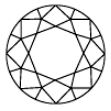
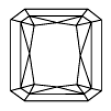
Diamond Shapes

Diamonds are renowned for their ability to transmit light and sparkle so intensely. A diamond’s shape is different that a diamond’s cut grade.
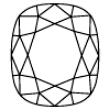

Cushion

Emerald

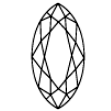
Marquise

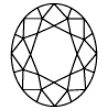
Oval

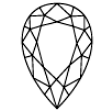
Pear

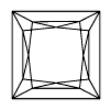
Princess

Round

Radiant

Diamond Quality – The 4 C’s:

GIA created the first, and now globally accepted standard for describing diamonds: Color, Clarity, Cut and Carat Weight. Today, the 4Cs of Diamond Quality is the universal method for assessing the quality of any diamond, anywhere in the world.
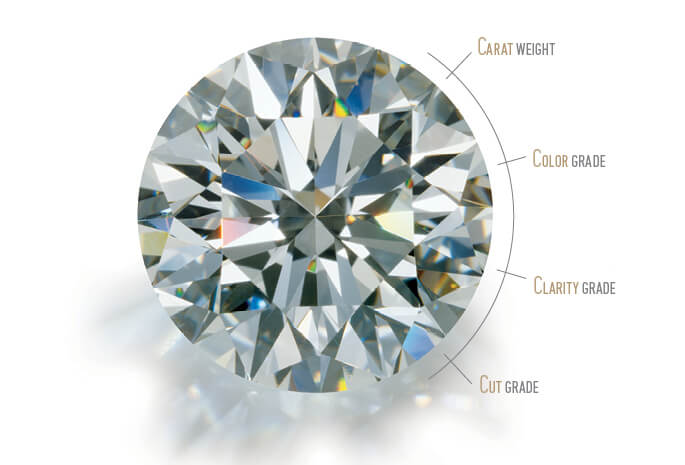
This basic knowledge will not only unlock the mystery of a diamond’s quality, it will help you understand a diamond’s value and price.

  • Diamond Carat Weight refers to a diamond’s weight. Generally speaking, the higher the carat weight, the more expensive the stone. Two diamonds of equal carat weight, however, can have very different quality and price when the other three Cs are considered.
  • Diamond Color Grade: In most diamonds, the term actually refers to the absence of color. The less color in the stone, the more desirable and valuable it is. Some of these differences are not visible to the naked eye, but directly impact the overall quality and price of the stone.
  • Diamond Clarity Grade measures the amount, size and placement of internal ‘inclusions,’ and external ‘blemishes.’ Grades run from ‘Flawless,’ with virtually no imperfections, to ‘Included,’ which contain a significant number of imperfections.
  • Diamond Cut Grade does not refer to a diamond’s shape, but to the proportion and arrangement of its facets and the quality of workmanship. The amount of brilliance, sparkle and fire in a diamond is determined by cut. Grades range from ‘Excellent’ to ‘Poor.’

No matter how beautiful a diamond may look you simply cannot see its true quality. The 4Cs of diamond quality will provide you with the information you need to know the diamond’s actual quality. Click here to learn more about the 4Cs of Diamond Quality.

You might also like…

The Diamond Center: Where Wisconsin Gets Engaged